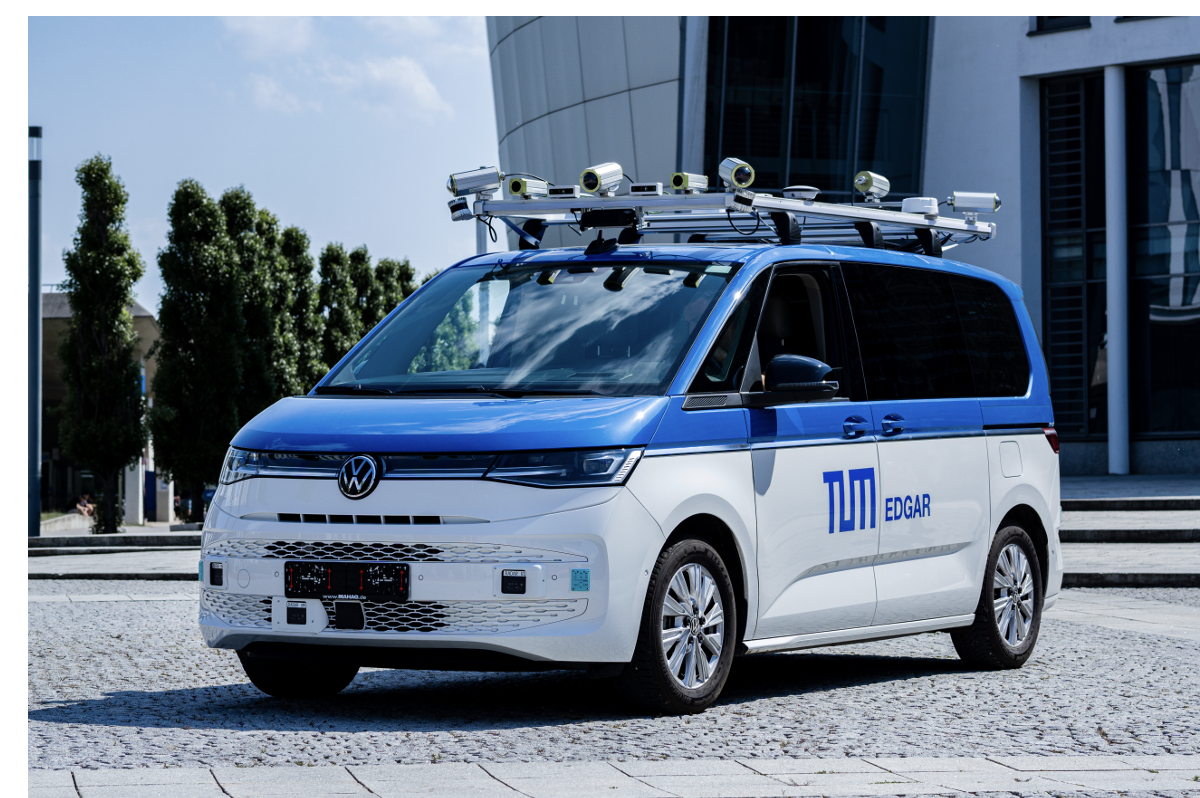
Our research vehicle EDGAR (Excellent Driving GARching) enables us to test the developed software under real conditions on the road. The research vehicle is equipped with extensive sensor technology for recording the environment and the vehicle's own condition, high-performance computers for applying the software and interfaces for controlling the longitudinal and lateral guidance. In addition, the high-performance computers are embedded in an extensive simulation environment, which is used during the entire development phase and for the automated testing of software functionality in the run-up to real vehicle tests. The research vehicle, including data center and simulator, are funded by a large-scale equipment application from the German Research Foundation (DFG) (approval according to Art. 91b GG with DFG file number INST 95/1653-1 FUGG).
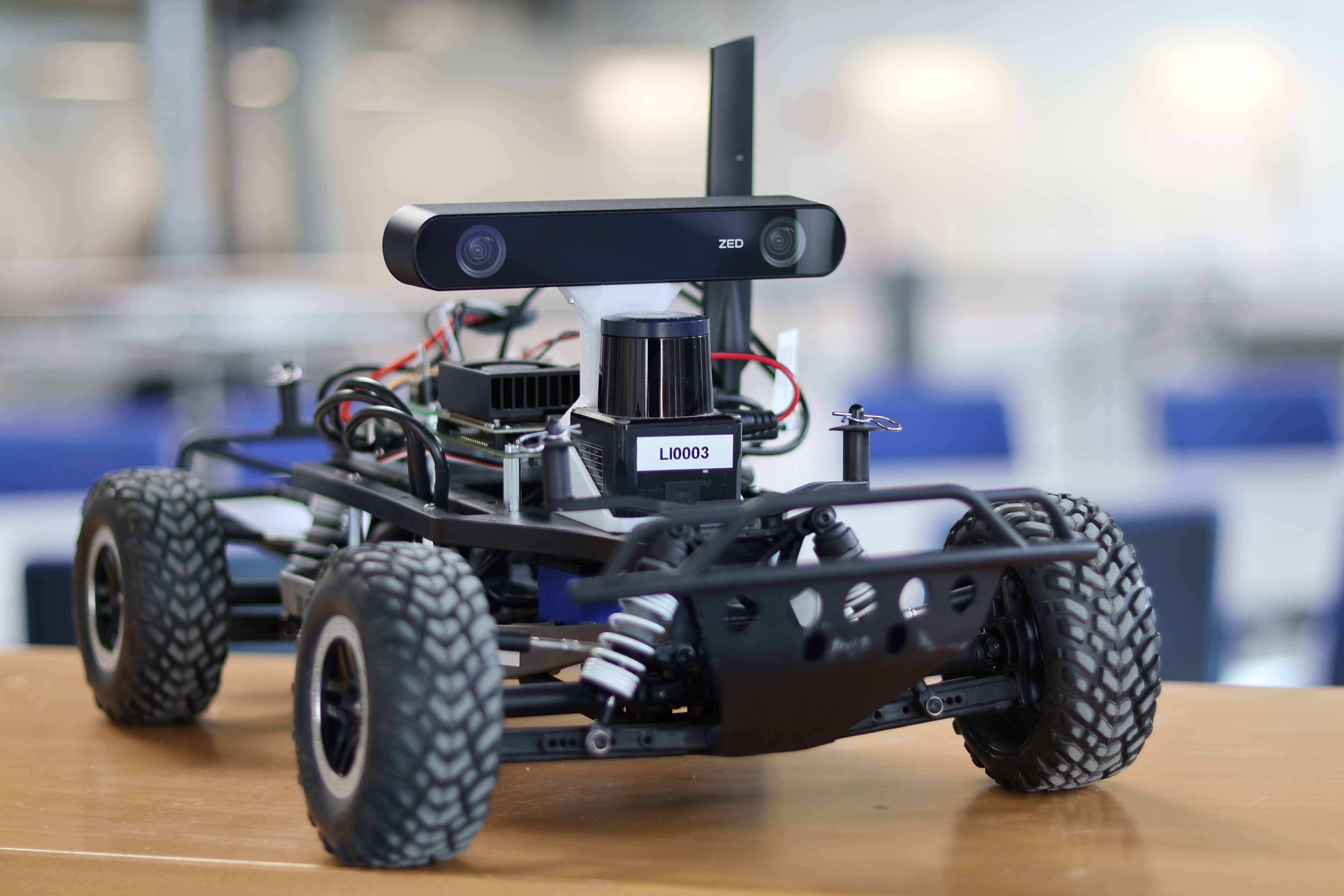
The RoboRacer vehicle is a 1/10th scale autonomous research vehicle consisting of a modified RC car platform equipped with a variety of sensors such as lidar, cameras and IMUs to collect real-time data about the environment. The platform is controlled by a powerful single board computer with GPU (Nvidia Jetson) that executes complex algorithms for perception, planning and control. By combining sensor technology and computing power, the RoboRacer vehicle enables the development and testing of autonomous driving technologies in a realistic yet safe environment.
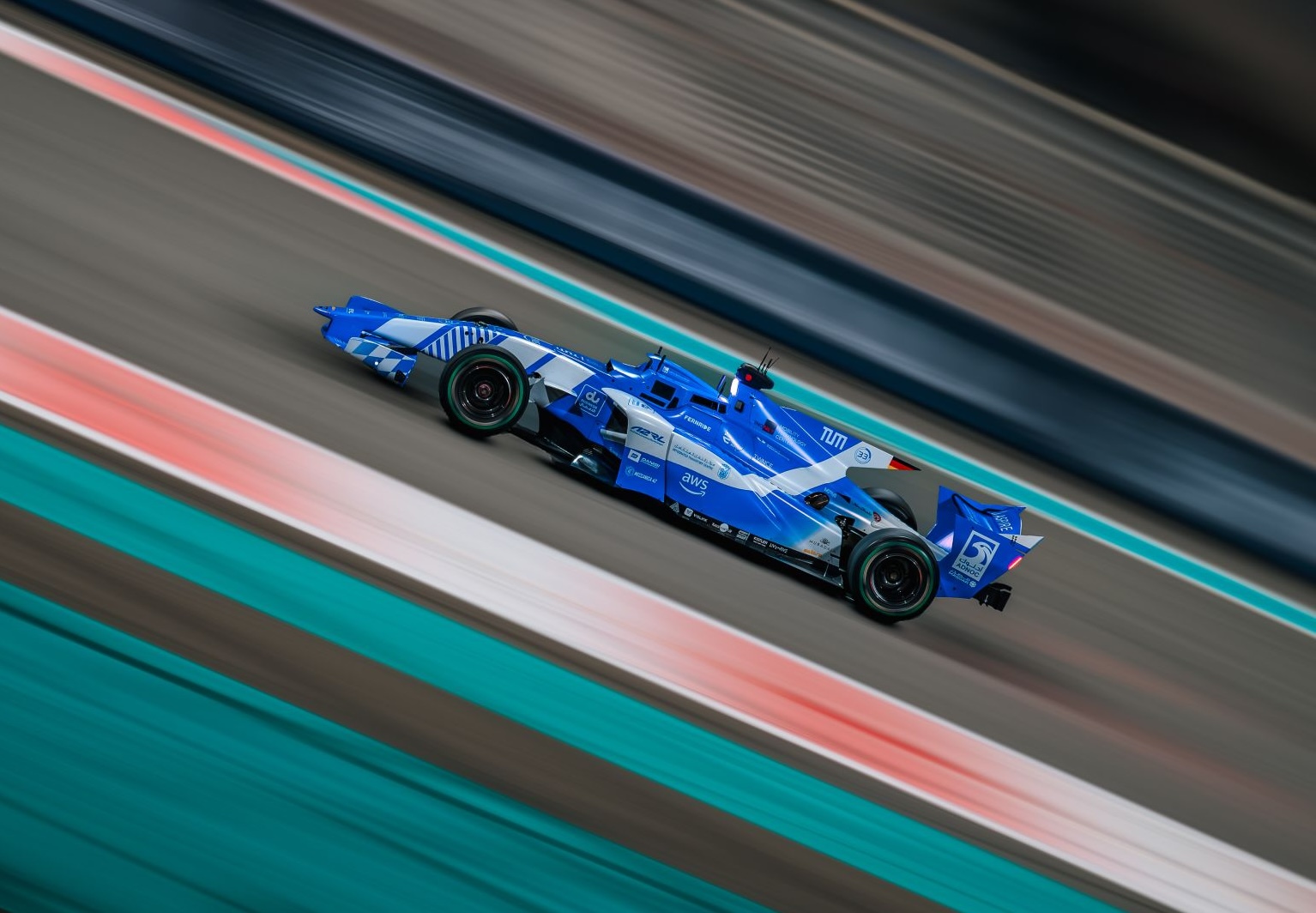
The autonomous race car EAV-25 is used in the A2RL and is based on a modified racing chassis from Dallara (derived from the Super Formula SF-23). The vehicle is equipped with a comprehensive sensor and electronics architecture: it uses multiple LiDAR sensors, radar systems, as well as cameras (providing 360° surround vision) and GNSS/GPS navigation. In addition, the system includes two Inertial Measurement Units (IMUs) for redundant position and motion analysis. Furthermore, the vehicle has been optimized for the demands of autonomous high-speed racing: the electronics have been made more robust (reinforced wiring, vibration-resistant data storage), and the sensor fusion and software logic have been refined to enable reliable real-time decision-making — including an emergency braking system and safety features. Thanks to the modified powertrain and the optimized chassis, the car can reach top speeds of approximately 260 km/h.
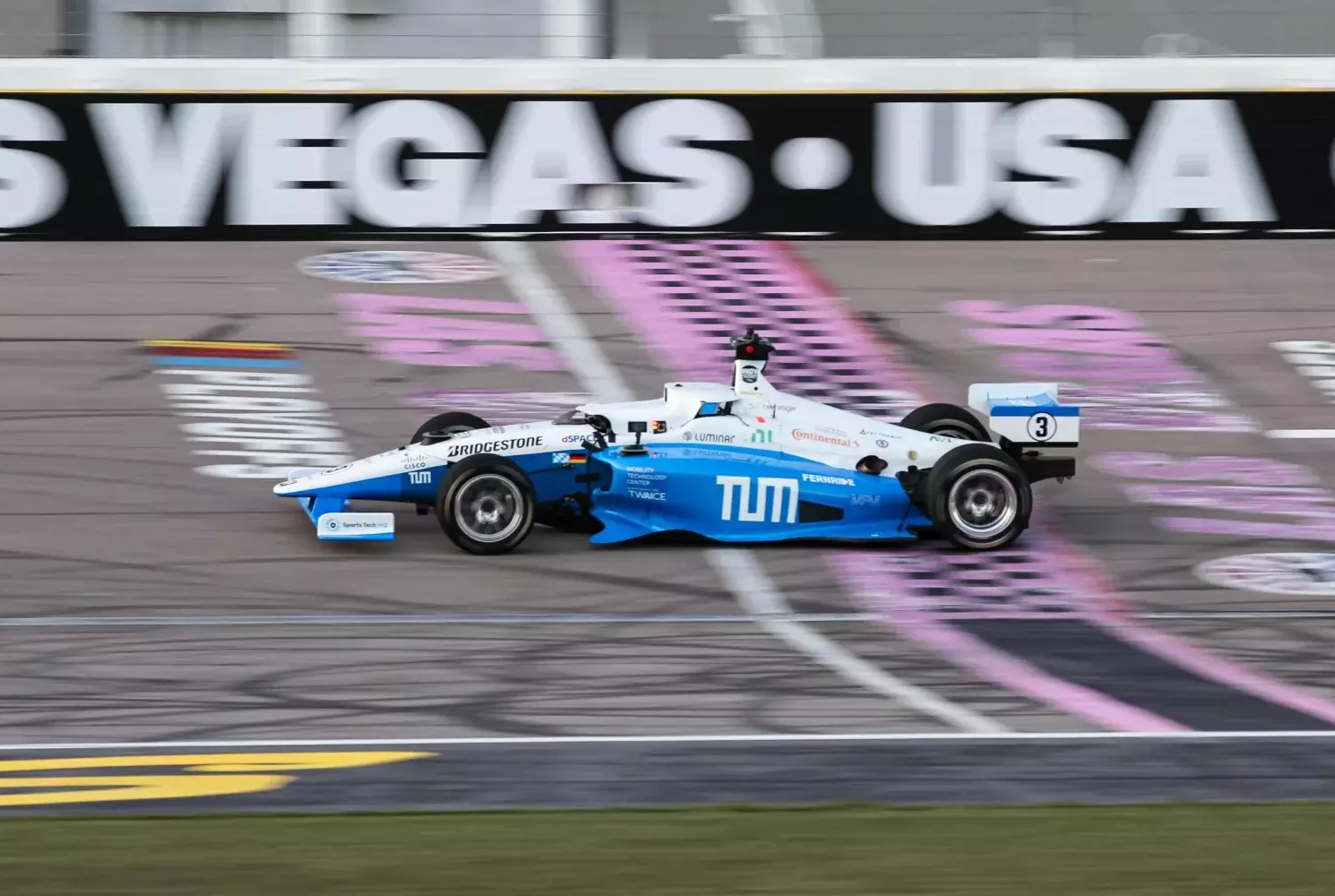
The autonomous racing car Dallara AV-21 is operated by our TUM Autonomous Motorsport Team. The vehicle is equipped with the Adlink - AVA 3501 computer, NVIDIA Quadro RTX 8000 GPU, Luminar Hydra LiDAR, Novatel Powerpak GPS/IMU, Mako camera and Aptiv (ESR-MRR) radar. Its hardware and software are designed for high-speed autonomous racing and can reach a top speed of 281 km/h. The vehicle's sensor architecture and computer systems are specifically designed for the Indy Autonomous Challenge, with a focus on performance and reliability at high speeds. The AV-21 demonstrates advances in autonomous vehicle technology with a focus on speed, precision and adaptability in a competitive environment.
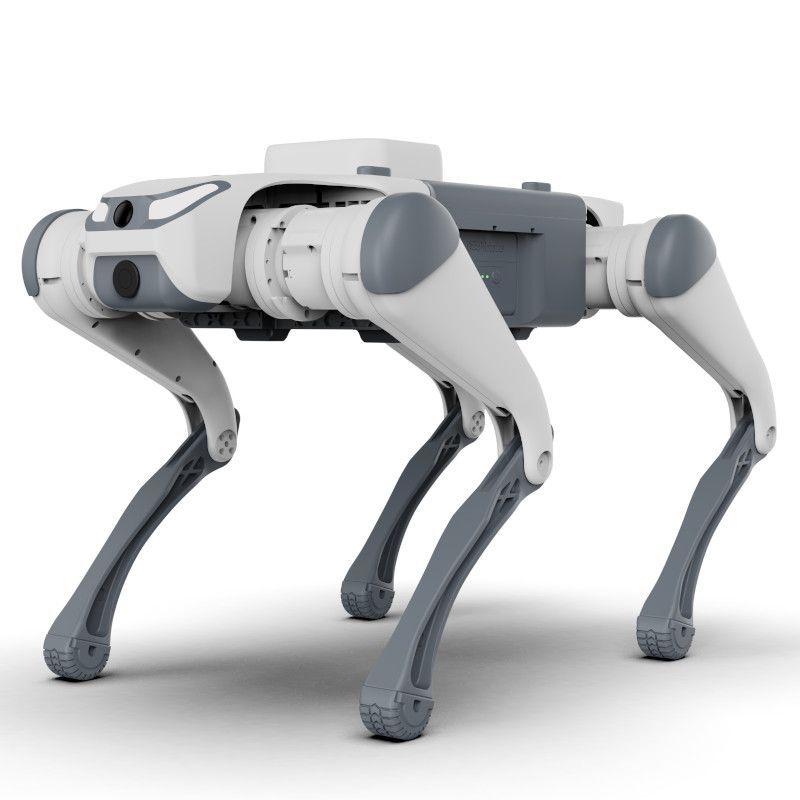
The SID1 – Lite³ Venture by Inmotion Robotics is a quadruped robot with high-torque actuators, enabling precise and dynamic movement across uneven terrain. It features modular interfaces (Ethernet, 5 V/12 V/24 V) for integrating external sensors and offers a range of up to 4 km with a battery life of 1.5–2 hours. Its open software architecture (BOW SDK) supports programming in Python or C++ and enables real-time visualization and autonomous navigation.
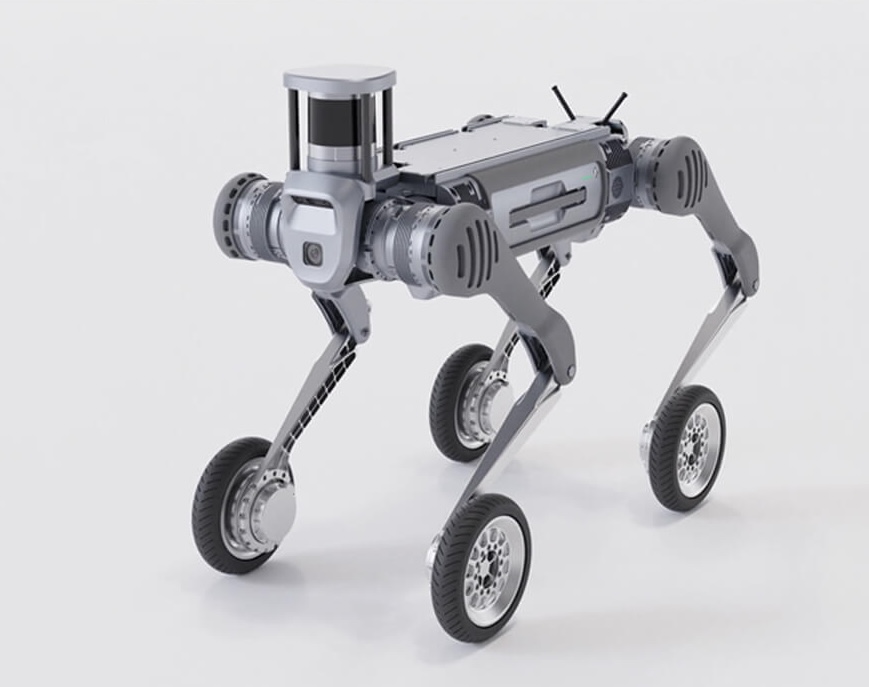
The Unitree B2 Wheeled + Unitree Z1 Arm system combines the mobility of a modern wheel-based quadruped robot with the precision of a manipulator arm. This platform enables both dynamic locomotion across diverse terrains and precise interaction tasks such as grasping, opening, or tool manipulation. It serves as a versatile research platform for mobile manipulation, autonomous navigation, and human–robot interaction.